
By Steve Giles
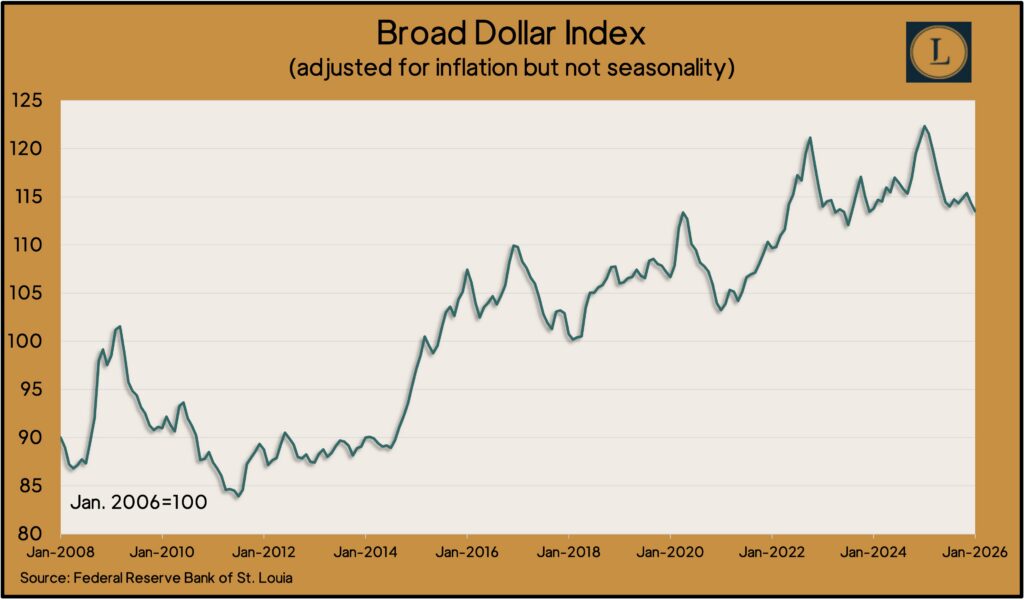
Last year, we discussed the possibility that the U.S. dollar had reached an extreme. The idea wasn’t to predict its decline but to recognize that currencies, like markets, tend to move in cycles.
(Click here to revisit Steve’s explanation of why the dollar matters in portfolio construction.)
Learn more
5 reasons to watch the dollar, by Steve Giles
International investment opportunities, a 2015 Money Talk Video with Steve Giles
Over there: Investing in a global economy, a Money Talk Video with Kyle Tetting
International Investing, from the Securities and Exchange Commission
How to Use International Stocks in Your Portfolios, by Morningstar
Since last year, the dollar has fallen more than 7%, reaching its lowest level since late 2023. That shift has had real implications for investors.
Weakness strengthens non-U.S. returns
For U.S.-based investors, a weaker dollar tends to amplify returns from international holdings. When foreign stocks rise in their local markets and those gains are translated back into a softer U.S. dollar, returns receive an additional lift. That dynamic played out over the past 12 months. Developed international markets, as measured by the MSCI ACWI ex USA index, outpaced the S&P 500 in 2025. Emerging markets did even better.
This is a reminder of something we emphasize often: Leadership rotates. For much of the last decade, U.S. stocks dominated. Over the past year, international exposure has contributed meaningfully to diversified portfolios.
Don’t go overboard
That said, it’s important not to overcorrect.
International investing comes with its own risks — currency volatility, geopolitical instability, differing regulatory environments and varying accounting standards. A weaker dollar can enhance returns, but currency moves can just as easily reverse. What helps one year can detract the next.
The takeaway is not that investors should chase what worked most recently. It’s that global diversification matters — especially when market leadership broadens.
What goes around…
Currencies are cyclical. Valuations are cyclical. Performance leadership is cyclical. A disciplined allocation across regions helps investors participate without having to predict which cycle turns next.
As always, geographic exposure is just one component of an overall strategy. The right mix depends on your objectives, time horizon and tolerance for volatility.
Steve Giles is a senior vice president and investment advisor at Landaas & Company, LLC.